

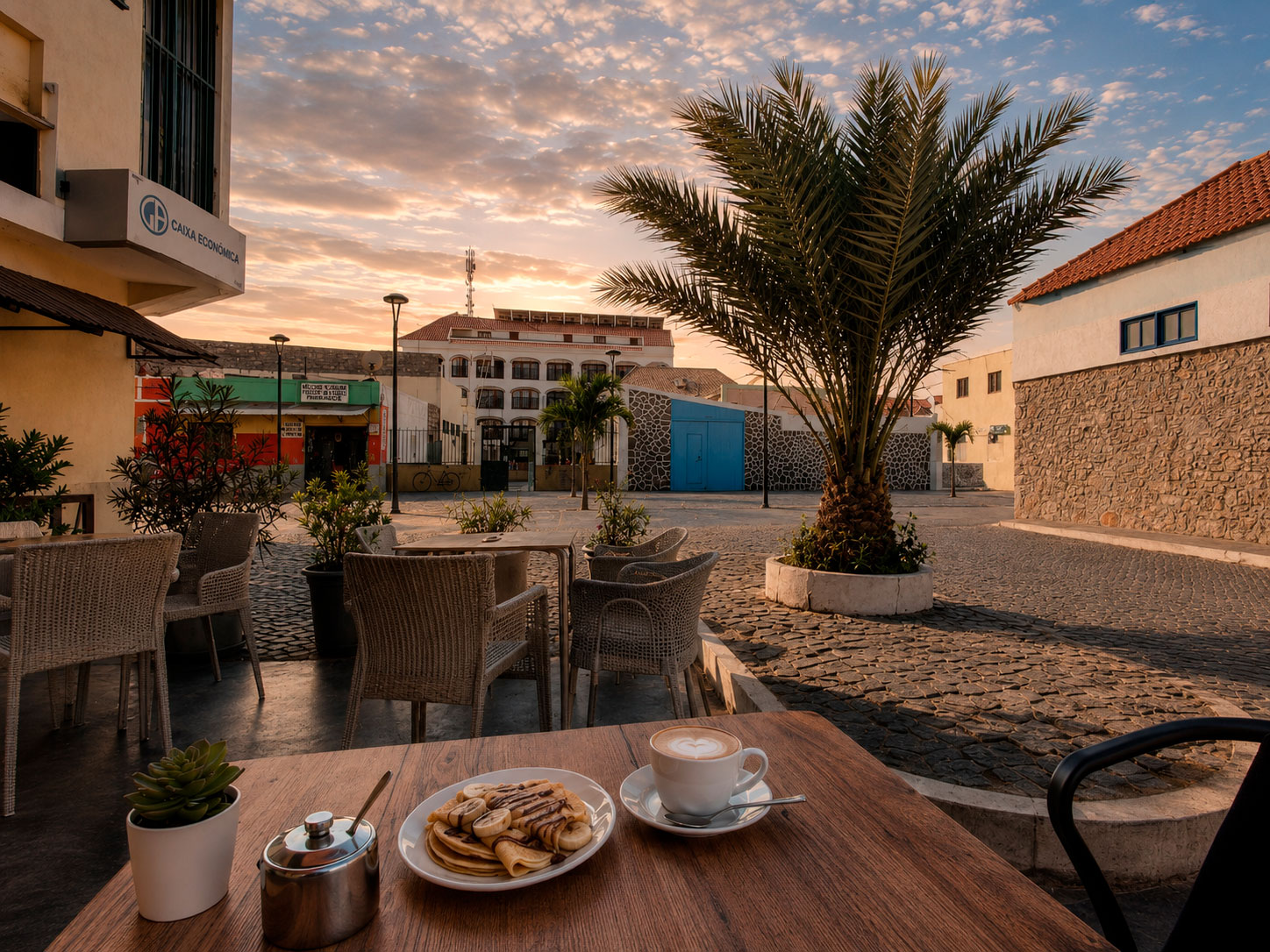
There is one idea that tends to appear quite quickly once someone has spent a few days in Sal and starts comparing the island with Europe almost without noticing: that things here “work worse” when in reality they often simply work differently.
This is not about Europe being right and Sal being wrong, or the other way around. It is about recognising that travellers often bring invisible expectations with them: expectations about time, service, organisation, speed and even the way people should behave in everyday interactions.
In Sal, those expectations sometimes meet a softer, more flexible rhythm. Not always better. Not always worse. But clearly different.
And this is worth saying from the beginning: understanding that difference can help you avoid pointless frustration. It can also help you enjoy the island more. Because part of the problem is often not Sal itself, but the mental clock the traveller brings with them.
The typical mistake: expecting everything to move at a European pace
You notice this very quickly in simple things: how long food takes in a restaurant, how a small task gets handled, how strictly a timetable is interpreted, or the feeling that certain things could be solved faster if everyone simply moved with more urgency.
And sometimes that may even be true. There are situations in Sal that could clearly be better organised. But other times, reading every slower rhythm as incompetence is too easy and not entirely fair.
The problem begins when the visitor automatically interprets a slower pace as a lack of professionalism, when in many cases it is simply a different relationship with time.
If you arrive with your internal clock still set to airport mode, traffic mode, office mode or “I have six things to do before lunch” mode, Sal can feel strangely slow at first. But the island is not always trying to match that rhythm. And perhaps that is part of the point.
Slower service does not always mean bad service
This point needs a bit of care, because it is easy to become simplistic here.
In Sal, it may happen that a meal takes longer than you would expect, that a table is not attended with the speed you consider normal in Spain, the UK, Germany or France, or that a reply arrives with less urgency than you imagined.
And yes, sometimes that can be irritating. Especially when you are hungry, sun-tired, or still operating with a European sense of efficiency.
But turning that experience straight into the judgment that “service here is bad” often means staying at the surface. Sometimes what you are seeing is not laziness, but a different balance between pace, human interaction and priority.
That does not make every delay charming. There is no need to romanticise waiting too long for lunch. But it does mean that not every slower interaction should be read as a failure.
Timetables are not always a sealed promise
This is another thing many tourists misunderstand in Sal. In theory, a timetable informs you. In practice, sometimes it guides you more than it guarantees you.
This can happen with small local services, informal arrangements, some excursions, transport, appointments or casual plans. It does not mean that nothing works or that everything is random. It means that in certain contexts, especially outside very controlled tourist structures, it helps to leave yourself a little margin.
The traveller who arrives expecting central-European precision in every detail may experience that elasticity as a constant defect. The traveller who understands the context earlier usually adapts better and suffers less.
In Sal, a useful habit is simple: do not build your whole day on the assumption that every small thing will happen at the exact minute you imagined. Leave space. The island tends to reward that.
Not everything that feels informal is a lack of seriousness
This happens a lot too. Some visitors automatically associate a more relaxed tone, a less rigid way of speaking, or a less ceremonial way of handling things with unprofessionalism.
And sometimes they get that wrong.
In places like Sal, the tone of interaction can feel more direct, warmer and less tightly packaged than what some travellers are used to. A conversation in a shop, with a taxi driver, at a beach bar or during a small local arrangement may not always follow the polished script of a European customer-service manual.
That does not automatically mean people do not care. It often means that the social language around work, service and everyday life is simply not wrapped in the same formal codes.
Put differently: not everything that is less rigid is less serious. Sometimes it is simply not dressed in the language you expected.
The tourist who comes to consume the island usually understands less
This is one of the most important differences.
Someone who arrives in Sal with a catalogue mentality — I want this, this and this, quickly, clearly and without friction — usually collides more with the local reality.
Someone who arrives with a bit more curiosity, less need to control everything and some willingness to read the place before judging it usually understands much better what is in front of them.
This can be felt especially when you move beyond the most polished tourist areas. Santa Maria may give you the easy beach version of Sal, but places like Espargos, Palmeira, Pedra de Lume or the island’s quieter roads show another side: less packaged, less immediate, and often more revealing.
You can come here trying to use the destination efficiently, or you can come here allowing the place to reveal its rhythm a little. The second option usually goes better.
Adapting better does not mean idealising everything
This also needs a bit of order, otherwise the article would end up sounding like a blind defence of every local flaw.
No. There are weak services, real disorganisation, badly handled schedules and situations that could obviously be done better. Of course there are. Not everything in Sal has some elegant cultural explanation behind it. Sometimes something goes wrong simply because it goes wrong, without deeper poetry.
But even then, it helps the traveller to distinguish between two things: what is genuinely poor management and what simply does not fit their own European automatisms.
Mixing both all the time only creates irritation and leads to a reading of the island that is not entirely fair.
So, what is worth understanding before you come?
The most useful answer is probably this: Sal does not always run on the same mental clock you bring with you. And the sooner you accept that, the better.
It helps to arrive with a bit more margin, a little less obsession with immediacy, and some willingness to read the local codes before imposing your own. That does not mean resigning yourself to everything. It means understanding where you are.
Because an island like Sal is not only understood through its beaches, climate or tourist side. It is also understood through its rhythm, through the way people relate to each other, through that less rigid kind of hospitality, and through a very real sense that life here does not always run just to prove that it is being productive.
In summary
Many tourists misunderstand life in Sal because they look at it through an excessively European template: speed, constant precision, strict timetables, immediate service and a strong logic of consumption.
And the island, although it clearly has a tourist-facing side, still moves according to other codes as well: more calm, more flexibility, more weight given to human interaction, and rather less worship of hurry.
Understanding that does not force you to justify everything. But it can help you do something much more intelligent: stop fighting the rhythm of Sal and start reading it better.