

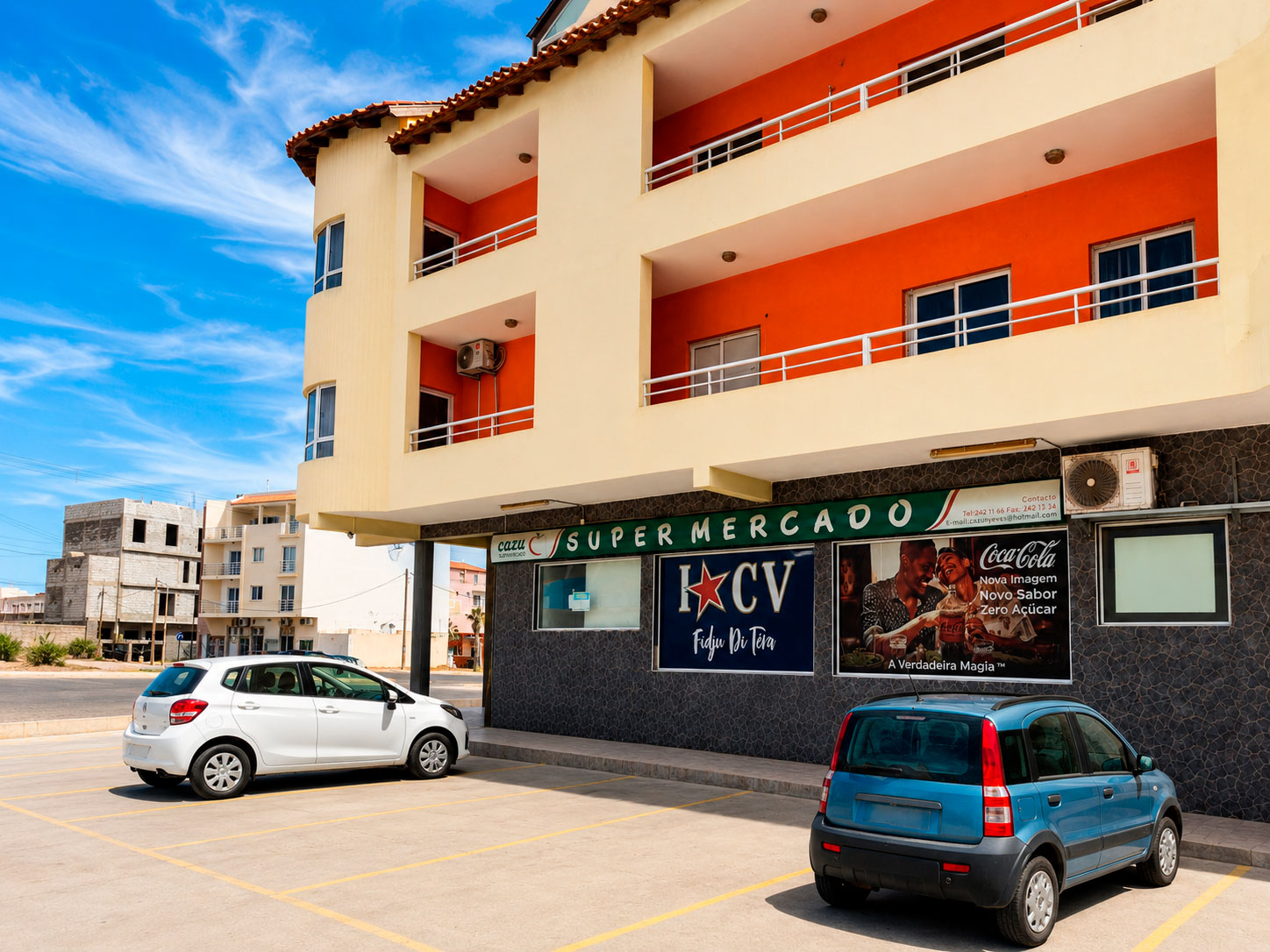
Staying in Sal Island for several weeks or months is very different from visiting for a normal holiday.
During a short trip, most of your attention goes to beaches, restaurants, excursions and the limited number of days available. During a longer stay, those things do not disappear, but they stop organising the entire experience.
Accommodation, groceries, transport, internet, household costs and ordinary routines begin to matter much more.
A long stay in Sal is not simply a holiday with extra nights. It is temporary everyday life in a place that still depends heavily on tourism and imported goods.
The holiday phase ends when ordinary days begin to matter more than special ones.
What counts as a long stay in Sal Island?
There is no official definition for travellers, but the experience usually begins to change once the stay extends beyond two or three weeks.
A useful distinction is:
- One to two weeks: still mainly a holiday.
- Three to four weeks: routines and repeated expenses become noticeable.
- One to three months: accommodation, cooking, transport and administration start shaping daily life.
- Several months: the stay begins to resemble temporary residence rather than tourism.
The longer you remain, the less useful it becomes to judge Sal only through beaches, excursions and restaurant experiences.
Travellers who are still deciding between a normal holiday and an extended visit may find it useful to compare this with how many days are normally enough to enjoy Sal Island.
Your accommodation becomes the centre of the stay
For a one-week holiday, a small room may be perfectly acceptable. For one or two months, the same space can become uncomfortable surprisingly quickly.
During a long stay, accommodation is not only somewhere to sleep. It is where you may:
- cook;
- work;
- wash clothes;
- rest during windy or unusually hot periods;
- store food and personal belongings;
- and spend ordinary evenings without going out.
That changes what you should inspect before committing to a rental.
Important things to check
- Reliable ventilation or air conditioning.
- Natural light.
- Noise during both the day and night.
- A usable kitchen rather than a decorative kitchenette.
- Fridge and freezer capacity.
- Hot water and water pressure.
- Laundry facilities or nearby laundry services.
- Storage space.
- Internet quality inside the property.
- Distance from supermarkets and everyday services.
- Security of doors and windows.
- Whether electricity, water and internet are included.
A beautiful terrace is pleasant. A functioning kitchen, quiet bedroom and stable internet may matter more by the third week.
For a long stay, choose a home before choosing a holiday photograph.
Location matters differently during a long stay
Central Santa Maria is convenient because many daily needs can be reached on foot.
That may include:
- supermarkets;
- restaurants;
- pharmacies;
- banks and ATMs;
- the beach;
- cafés;
- and transport options.
However, central areas can also bring more noise, tourist movement and higher rental prices.
A quieter area may offer more space or better value, but it can also create greater dependence on taxis, a rental car or careful planning.
For a long stay, calculate the cost and inconvenience of repeated journeys, not only the monthly rent.
A cheaper apartment can stop being cheap when every meal, supermarket visit or evening out requires transport.
Our guide to where to stay in Sal Island compares central Santa Maria, quieter residential areas, Murdeira, Espargos and other possible bases.
Monthly rent is not the entire housing cost
When comparing long-term accommodation, ask exactly what the price includes.
Possible extra costs include:
- electricity;
- water;
- internet;
- gas;
- cleaning;
- laundry;
- maintenance charges;
- security deposits;
- and agency or management fees.
Electricity can become especially relevant if you use air conditioning, electric cooking equipment or work from home for many hours.
Do not rely only on the advertised monthly price. Ask for a realistic estimate of previous utility costs and clarify how consumption is measured.
Cooking becomes more important
Eating in restaurants every day may feel natural during a holiday. Over several weeks, it can become expensive, repetitive and impractical.
A long stay usually works better when you combine:
- home cooking;
- simple local meals;
- occasional restaurant visits;
- and more deliberate spending on special meals.
This is why the kitchen matters so much.
Check whether the property genuinely includes:
- enough pans and utensils;
- a usable hob or cooker;
- food preparation space;
- a working fridge;
- and somewhere comfortable to eat.
A kitchen listed in the description does not always mean a kitchen designed for daily use.
Groceries may not work exactly as they do at home
Many products in Sal are imported, which affects price, variety and availability.
During a short stay, this may barely matter. During a long stay, you begin to notice:
- which products are consistently available;
- which items are expensive;
- which brands change from one delivery to another;
- and which foods are better replaced with local or simpler alternatives.
If you insist on buying exactly the same products you use at home, your food budget may increase quickly.
A more practical approach is to adapt your meals to what is reasonably available rather than treating every shopping trip as a search for imported familiarity.
Water deserves practical planning
For most visitors, drinking water means bottled or properly treated water rather than relying casually on tap water.
During a longer stay, repeatedly buying small bottles is inconvenient and creates unnecessary waste.
Depending on the accommodation, it may be more practical to use:
- larger bottles;
- refillable containers;
- a delivery arrangement;
- or a suitable filtration system where appropriate.
Also clarify whether interruptions or low water pressure occasionally affect the property.
Water is a minor detail on a hotel stay. It becomes household infrastructure when you remain for months.
Our guide to drinking tap water in Sal without overdramatising the issue explains the most practical options for visitors.
Internet quality becomes essential, not optional
Holiday Wi-Fi only needs to be good enough for messages, maps and occasional streaming.
If you work remotely, manage a business or depend on video calls, the standard changes completely.
Before committing to accommodation, check:
- the actual connection speed;
- stability at different times of day;
- whether the router is inside the property or shared;
- mobile coverage indoors;
- and what backup option you have if the connection fails.
Do not accept “good Wi-Fi” as sufficient information.
Ask for a recent speed test or test the connection yourself before paying for a long period.
A sensible backup plan
Remote workers should normally have:
- a local mobile-data option;
- a phone capable of tethering;
- important documents available offline;
- and realistic expectations about occasional interruptions.
Working beside the beach sounds attractive. Missing a client meeting because the shared router disappeared with the landlord is less cinematic.
For more detail, see our comparison of Internet access, local SIM cards and eSIMs in Sal Island.
Transport becomes a repeated expense
During a holiday, an occasional taxi may feel insignificant. Over several weeks, repeated journeys can become a meaningful part of the budget.
Your best option depends on location and routine:
- Walking: practical in central Santa Maria for many daily needs.
- Taxis: convenient for occasional journeys but costly if used repeatedly.
- Local shared transport: cheaper where routes and schedules suit your needs.
- Bicycle or e-bike: useful for some routines, although wind, sun and road conditions matter.
- Rental car: flexible, but rarely economical if it remains parked most days.
Before choosing accommodation outside the main service areas, calculate what your normal week will require.
Our guide to getting around Sal by walking, taxi, shared transport and rental vehicle can help you compare those recurring costs.
Laundry and cleaning stop being hotel details
On a short trip, laundry can be postponed. During a long stay, it becomes part of the routine.
Check whether the property includes:
- a washing machine;
- a suitable drying area;
- cleaning equipment;
- replacement bedding and towels;
- or access to an affordable laundry service.
The wind can help clothes dry quickly, but it can also introduce dust and sand into the process.
Clarify who is responsible for cleaning, repairs and replacing household items.
Healthcare and medication require more preparation
For a short trip, basic travel insurance and a small medical kit may be enough.
For a longer stay, consider:
- how you would access a clinic;
- whether your insurance covers the entire period;
- where nearby pharmacies are located;
- whether your regular medication is available locally;
- and whether you have enough prescription medication for the stay.
Do not assume that a familiar brand or specific prescription will be easy to replace.
Bring documentation for essential medication and keep an emergency contact plan available.
Legal stay limits become relevant
A normal tourist may only need to check entry requirements and travel documentation.
Someone planning to remain for several weeks or months must pay closer attention to:
- the permitted length of stay;
- visa or entry conditions;
- possible extensions;
- registration requirements;
- and whether remote work, employment or business activity changes the legal situation.
Do not assume that renting an apartment or having enough money automatically gives you permission to stay indefinitely.
Immigration rules can change, so verify the requirements with the appropriate Cape Verdean authorities before travelling.
This article focuses on everyday life rather than immigration procedure. Legal arrangements deserve separate and current verification.
A long stay can feel socially different
During a holiday, being surrounded by strangers is normal. During a longer stay, some people begin to feel isolated despite living in a tourist town.
Social life often develops through repetition:
- returning to the same café;
- using the same shops;
- joining sports or activities;
- meeting other long-stay visitors;
- and developing ordinary conversations with local residents.
This takes time and cannot be forced.
At the same time, do not confuse friendliness with immediate deep friendship. Long stays become easier when you allow relationships to develop naturally.
Routine is not a failure
Many people imagine a long stay as a continuous sequence of beach days, excursions and memorable evenings.
Real life eventually includes:
- shopping;
- working;
- cleaning;
- cooking;
- waiting;
- and days when very little happens.
This is not evidence that the island has become boring. It means the destination has stopped functioning only as entertainment.
A healthy routine may include:
- regular working hours;
- exercise;
- selected beach time;
- home-cooked meals;
- planned social activity;
- and quiet periods without pressure to make every day special.
Boredom is possible, especially after the novelty fades
Sal is small and does not offer the variety of a major city.
Once the main excursions, restaurants and beaches become familiar, the question changes from “What can I see?” to “Can I build a satisfying routine here?”
A long stay may become difficult for people who need:
- constant cultural events;
- large shopping areas;
- a highly varied nightlife;
- frequent changes of scenery;
- or endless new activities.
It may suit people who value:
- simplicity;
- sun and outdoor life;
- water sports;
- repeated routines;
- and a slower social environment.
There is no correct reaction. The point of a longer stay is often discovering whether the island’s limitations feel peaceful or restrictive to you.
The tourist economy becomes more visible
During a short holiday, tourist prices and services can feel like part of the package.
During a longer stay, you begin to distinguish between:
- places designed mainly for short-term visitors;
- businesses useful for everyday life;
- local prices;
- tourist-oriented prices;
- and services that are convenient but difficult to justify repeatedly.
This does not mean trying to avoid every tourist business.
It means choosing more deliberately. A restaurant that works well once a week may not be realistic every day. A taxi that is convenient occasionally may become expensive as a routine.
What budget categories should you calculate?
Before planning a long stay, estimate at least:
- monthly rent;
- deposit and initial fees;
- electricity and water;
- internet and mobile data;
- groceries;
- restaurants and social life;
- transport;
- laundry and cleaning;
- health insurance and medication;
- visa or administrative costs;
- and an emergency reserve.
Do not calculate the stay by multiplying the cost of a one-week holiday. Long-term spending follows a different pattern.
You may spend less on excursions and restaurants, but more on household costs, transport, internet and unexpected practical needs.
Questions to ask before renting long term
- What exactly is included in the monthly rent?
- How are electricity and water calculated?
- How much was the previous tenant’s average utility bill?
- Is the internet private, shared or mobile-based?
- Is there a deposit, and under what conditions is it returned?
- Who pays for repairs?
- Is cleaning included?
- Is the property noisy at night?
- Can you test the shower, appliances and internet?
- Is the kitchen equipped for daily cooking?
- How far are supermarkets, pharmacies and transport?
- Is there a written rental agreement?
For a long stay, verbal assurances are not enough. Ask for clear written conditions.
Who is a long stay in Sal likely to suit?
It may work well for:
- remote workers with reliable income;
- people taking an extended break;
- water-sports enthusiasts;
- travellers considering a future move;
- retired visitors seeking a warmer temporary base;
- and people comfortable with a small island environment.
It may be more difficult for:
- people who require constant variety;
- those dependent on specialised healthcare;
- remote workers without a connectivity backup;
- visitors with a very limited budget but expensive imported habits;
- and anyone assuming that holiday excitement will remain unchanged for months.
A practical transition from holiday to long stay
First week
- Explore the area.
- Understand transport and payment options.
- Test supermarkets, restaurants and internet.
- Avoid making too many long-term commitments immediately.
Weeks two to four
- Establish a routine.
- Track real spending.
- Identify regular shops and services.
- Adjust transport and eating habits.
- Check whether the accommodation genuinely works.
After the first month
- Review the budget.
- Confirm immigration and administrative arrangements.
- Decide whether the location remains convenient.
- Build sustainable working, social and health routines.
- Assess whether the island fits you beyond the holiday phase.
Looking for accommodation that works beyond a short holiday?
Browse apartments, hotels, guesthouses and other places to stay across Sal Island through our local directory.
In summary
A long stay in Sal Island is not simply a longer version of a short holiday.
After the first weeks, beaches and excursions remain part of the experience, but accommodation, groceries, utilities, internet, transport and routine become much more important.
A successful extended stay usually depends on:
- choosing a genuinely liveable property;
- understanding all housing costs;
- having reliable internet and a backup connection;
- adapting food and transport habits;
- planning healthcare and legal requirements;
- and accepting that ordinary days are part of the experience.
Sal can be comfortable, simple and rewarding for several weeks or months. It can also feel limited once the novelty disappears.
The real question is not whether Sal is pleasant for a holiday. It is whether its ordinary life suits the way you want to live.
A long stay gives you enough time to discover that honestly.