

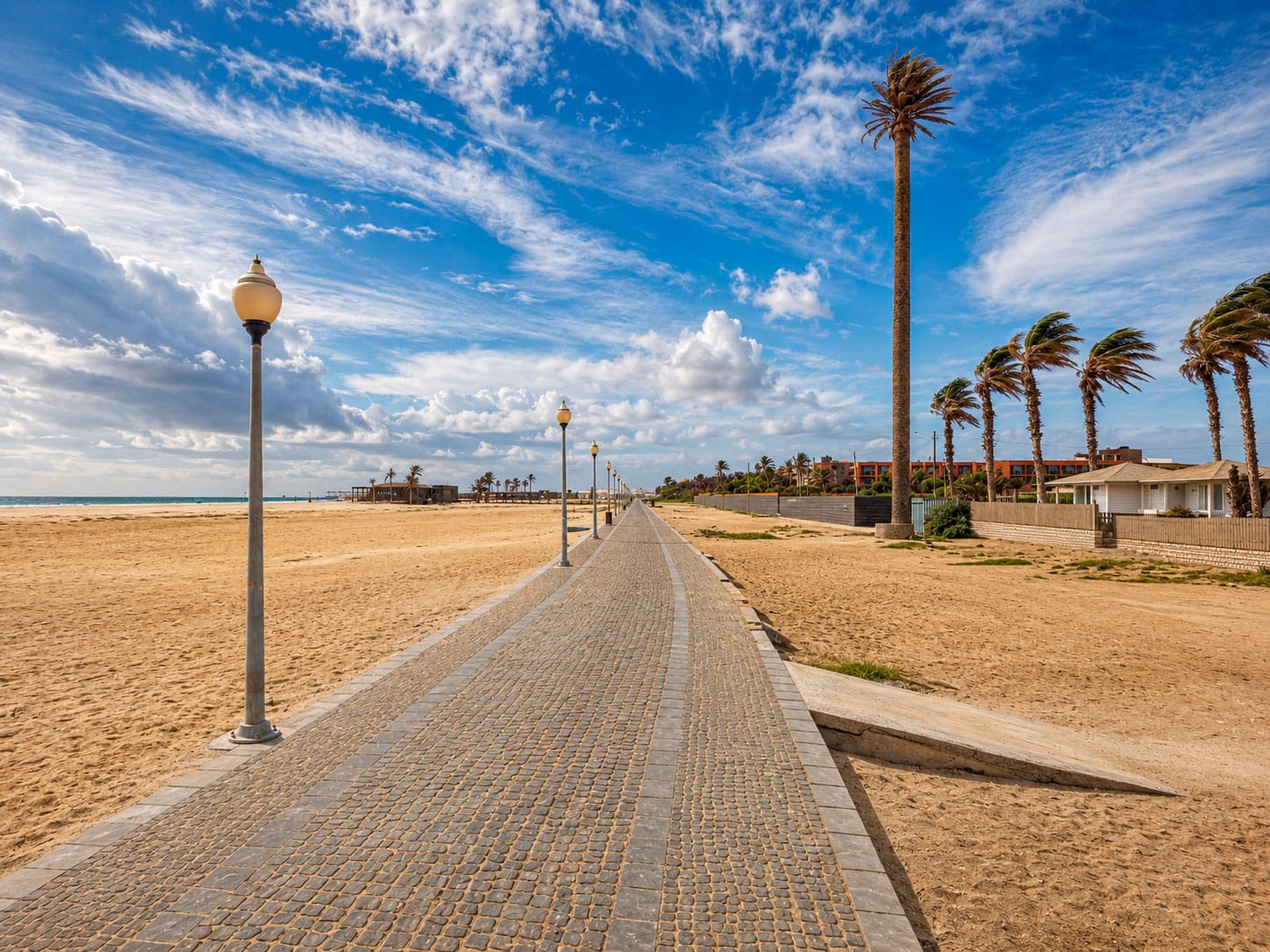
Sal Island has warm temperatures, little rainfall and plenty of usable beach weather throughout the year.
But saying that “the weather is always good” is not enough to help someone choose when to travel.
The island does change through the year. The differences are not usually dramatic, but they affect how the beach feels, how strong the wind seems, how warm the sea is and which activities are most comfortable.
For most travellers, the main seasonal difference in Sal is not sunshine versus bad weather. It is stronger wind and fresher conditions versus warmer, calmer and slightly more humid months.
Sal has no clearly bad month, but different months suit different kinds of traveller.
Quick overview of Sal Island weather
| Period | What it generally feels like | Best suited to |
|---|---|---|
| January–March | Warm, dry and noticeably windy, with cooler evenings and sea temperatures | Kitesurfing, walking and travellers who dislike strong heat |
| April–June | Dry, bright and gradually warmer, with wind still present | Beach holidays, outdoor activities and balanced conditions |
| July–August | Warmer, more humid and generally less windy | Swimming, calmer beach days and warmer evenings |
| September–October | Warmest sea and air temperatures, lower wind and the highest chance of rain | Warm-water swimming and travellers who prefer softer wind |
| November–December | Warm and increasingly windy, with temperatures beginning to ease | Winter sun, water sports and active holidays |
Average weather in Santa Maria month by month
The following figures are long-term averages for Santa Maria and should be treated as planning references rather than exact forecasts.
| Month | Average high | Average low | Sea temperature | Wind tendency |
|---|---|---|---|---|
| January | 25°C | 20°C | 23°C | Strong |
| February | 25°C | 19°C | 22°C | Strong |
| March | 26°C | 19°C | 22°C | Strong |
| April | 26°C | 20°C | 22°C | Strong |
| May | 26°C | 21°C | 23°C | Strong |
| June | 27°C | 22°C | 23°C | Moderate to strong |
| July | 28°C | 24°C | 24°C | Moderate |
| August | 29°C | 25°C | 26°C | Lighter |
| September | 30°C | 25°C | 27°C | Lighter |
| October | 29°C | 24°C | 27°C | Moderate |
| November | 28°C | 23°C | 26°C | Increasing |
| December | 26°C | 21°C | 24°C | Strong |
Actual weather can be warmer, cooler or windier than these averages on any individual day.
January: dry, bright and windy
January is one of the cooler months in Sal, although daytime temperatures still feel pleasantly warm.
You can generally expect:
- bright and mostly dry days;
- noticeable trade winds;
- comfortable temperatures for walking and excursions;
- cooler evenings, particularly beside the sea;
- and ocean water that may feel fresh when you first enter.
January works well for active travellers and water-sports enthusiasts. Beach holidays are still very possible, but people expecting still air and very warm water may find conditions fresher than imagined.
February: one of the coolest months
February is similar to January and is often among the coolest periods of the year.
“Cool” in Sal does not mean winter coats. It means warm daytime weather with evenings that may justify a light jumper, overshirt or wind-resistant layer.
The wind remains important, especially on exposed beaches.
February may suit you if you prefer:
- comfortable rather than intense heat;
- dry conditions;
- walking and sightseeing;
- and reliable wind for kitesurfing or windsurfing.
March: still windy, with gradually stronger sun
March remains dry and windy, while daylight and solar intensity continue increasing.
The air temperature is generally pleasant, but the wind can make exposed beach areas feel cooler than the thermometer suggests.
At the same time, the moving air can disguise how strong the sun is.
A fresh breeze does not reduce ultraviolet exposure.
March is a good month for travellers who want warmth without the more humid feeling of late summer.
April: warm days and very little rain
April normally brings warm, bright and extremely dry conditions.
The wind is still frequently present, particularly around open stretches of coast, but daytime temperatures are comfortable for beach time and exploring.
April often offers a useful balance between:
- warm sunshine;
- limited rainfall;
- comfortable evenings;
- and conditions suitable for outdoor activity.
The sea remains relatively fresh compared with September or October.
May: dry, sunny and still breezy
May is normally one of the clearest and driest parts of the year.
Temperatures rise slightly, but the trade winds continue preventing the heat from feeling too heavy.
This can be an excellent period for travellers who want:
- reliable beach weather;
- warm days without the highest humidity;
- active excursions;
- and long periods outdoors.
Those who dislike persistent wind should still choose their beach and accommodation location carefully.
June: warmer, but the wind remains noticeable
June marks the transition towards the warmer part of the year.
Days become warmer, nights soften and the sea begins its gradual rise in temperature. Wind speeds generally start to ease, although June can still feel distinctly breezy.
Rain remains very unusual.
June is a strong all-round month for:
- beach holidays;
- walking;
- excursions;
- and travellers wanting warmth without the peak humidity of late summer.
July: warmer air and less aggressive wind
July feels different from the first half of the year.
The air becomes warmer and more humid, while average wind speeds fall noticeably.
This often makes beach days feel calmer, although the wind does not disappear completely.
The sea also begins to feel more inviting for people who find the winter water too fresh.
July may suit travellers who prioritise:
- swimming;
- warmer evenings;
- less persistent wind;
- and a more recognisable summer atmosphere.
August: hot, humid and comparatively calm
August is among the warmest months in Sal.
Average wind is usually lower than during winter and spring, and the sea is noticeably warmer.
The trade-off is increased humidity. The air may feel heavier, especially when the wind drops.
There is also a slightly greater possibility of cloud, brief showers or unsettled periods than during the very dry spring months.
August is often appealing for:
- warm-water swimming;
- calmer beach conditions;
- families travelling during school holidays;
- and visitors who prefer heat to strong wind.
Families travelling during the warmer months may also find our guide to visiting Sal Island with children useful for planning sun protection, beach time and daily routines.
September: the warmest and relatively wettest month
September commonly brings the highest average air and sea temperatures.
It is also the month with the greatest chance of rainfall, although that needs to be understood in Sal’s very dry context.
The higher rainfall probability does not normally mean continuous rain for days. It is more likely to involve:
- short showers;
- cloudier periods;
- isolated heavier rainfall;
- or several unsettled hours followed by usable weather.
September is often less windy and more humid than winter.
It can be one of the best months for people who want warm sea water and calmer air, but it is not the best choice for anyone seeking maximum wind reliability.
October: warm sea and softer conditions
October remains warm, with sea temperatures close to their annual peak.
The chance of rain generally begins to reduce after September, although occasional showers or cloudy periods remain possible.
Wind starts to increase gradually but is usually less dominant than from December to spring.
October offers a good balance for travellers who want:
- warm swimming conditions;
- hot but manageable days;
- less wind than in winter;
- and fewer concerns about the peak summer humidity.
November: warmer than winter, but wind returns
November remains warm, especially at the beginning of the month, while the trade winds become more established again.
The sea is still relatively warm after summer, making November attractive for travellers wanting a combination of:
- warm water;
- bright days;
- increasing wind;
- and lower rainfall risk than in September.
Humidity begins easing, and evenings gradually become fresher.
December: reliable winter sun with stronger wind
December is a popular winter-sun month.
Conditions are generally warm, dry and bright, but the wind is often noticeably stronger than during late summer.
Daytime weather is comfortable for the beach, excursions and walking. Evenings can feel fresh in exposed restaurants, terraces or seafront areas.
December works especially well for:
- escaping colder European weather;
- kitesurfing and windsurfing;
- outdoor exploration;
- and travellers who prefer moderate heat.
Pack for warmth, but include one light layer rather than assuming every evening will feel tropical. Our practical guide to what to pack for Sal Island explains which clothes and accessories are genuinely useful for sun, wind and exposed evenings.
When is Sal Island most windy?
The windiest part of the year generally runs from late autumn through spring.
December to May usually brings the most persistent trade winds, with January, February and April often feeling particularly exposed.
Wind conditions vary between days and locations. A sheltered hotel terrace can feel calm while Kite Beach or Ponta Preta feels considerably stronger.
The wind affects:
- how warm the air feels;
- comfort on exposed beaches;
- sand movement;
- swimming and water conditions;
- boat activities;
- and the quality of kitesurfing or windsurfing sessions.
It is not automatically bad weather. On Sal, wind and sunshine frequently arrive together.
When is Sal Island least windy?
Average wind speeds are generally lowest between July and September.
August is often one of the calmest months, although calm is relative on an island known for trade winds.
These months can feel more comfortable for travellers who dislike:
- moving sand;
- cooler beach sensations;
- wind around outdoor restaurant tables;
- or constantly securing towels and lightweight belongings.
The reduction in wind also means the heat and humidity become more noticeable.
When is the hottest time to visit?
August, September and October are normally the warmest months.
September generally has the highest average temperatures, with daytime highs around 30°C and warm nights around 25°C.
These figures may not appear extreme, but humidity and reduced wind can make the heat feel more present than the thermometer suggests.
When is the coolest time?
January, February and March are the coolest months.
Daytime temperatures remain suitable for outdoor activity, but nights and windy coastal areas can feel surprisingly fresh.
People who become cold easily may appreciate:
- a light jumper;
- a thin windbreaker;
- or a long-sleeved overshirt for evenings.
This is clothing advice in context, not a suggestion that Sal experiences a conventional winter.
When is the sea warmest?
The sea is generally warmest in September and October, averaging around 27°C near Santa Maria.
August and November also offer relatively warm water.
The coolest sea temperatures usually occur between February and April, averaging approximately 22°C.
Some visitors find that refreshing. Others prefer a rash vest or light thermal protection for longer sessions in the water.
Does it rain much in Sal Island?
No. Sal is a very dry island.
Rainfall is limited during most of the year, especially from spring into early summer.
The greater possibility of rain normally occurs from August to October, with September usually recording the highest average rainfall.
Even then, visitors should not imagine a conventional rainy season with guaranteed daily downpours.
Rain in Sal can be:
- brief and highly localised;
- irregular from one year to another;
- heavy for a short period;
- or almost absent during an individual visit.
Because the landscape is so dry, even limited rainfall can temporarily affect roads, drainage or low-lying areas.
What about cloud and hazy skies?
Not every day in Sal has a perfectly clear blue sky.
Cloud cover can vary, particularly during the warmer and slightly wetter part of the year.
The islands may also experience periods of airborne dust or haze arriving from the Sahara. These episodes can reduce visibility, soften the colour of the sky and occasionally affect people with sensitive respiratory systems.
A hazy day is not necessarily a cold or rainy one. The temperature can remain warm even when the sky looks muted.
Can weather forecasts for Sal be misleading?
Forecast applications are useful, but their symbols can be interpreted too dramatically.
For example:
- a wind icon does not mean a ruined beach day;
- a cloud symbol does not mean there will be no sun;
- a small rain probability does not imply all-day rain;
- and one general forecast may not describe every coast equally well.
Use forecasts to identify trends, not to decide that the entire day has already failed before breakfast.
For sea activities, follow the operator’s advice because wind direction, swell and local coastal conditions matter more than a simple weather icon.
Best time for a general beach holiday
Sal can support a beach holiday throughout the year, but preferences matter.
Consider:
- April to June for dry, bright and warm conditions with regular wind;
- July to October for warmer sea and generally softer wind;
- November to March for winter sun, comfortable temperatures and a fresher atmosphere.
Travellers who strongly dislike wind may prefer August, September or October.
Travellers who dislike humidity and higher heat may prefer winter or spring.
The most suitable coast also depends on the activity and the conditions of the day. Our guide to the best beaches in Sal Island and what each one is suited to compares swimming areas, exposed beaches and water-sports locations.
Best time for kitesurfing and windsurfing
The most reliable period for wind sports generally extends from late autumn through spring.
December to March is particularly popular, although usable conditions can extend beyond those months.
The best period also depends on:
- skill level;
- preferred location;
- wind direction;
- wave conditions;
- and the type of session desired.
Beginners should choose a reputable school and allow enough days for conditions to vary.
Best time for swimming and calmer beach days
For warmer water and lower average wind, August to October is usually the strongest period.
However, swimming suitability also depends on the specific beach and daily sea conditions.
Calmer annual averages do not guarantee calm water at every location.
Santa Maria and Murdeira may offer more accessible swimming conditions on suitable days, while Ponta Preta and exposed coastal areas can remain unsuitable for inexperienced swimmers regardless of the month.
Best time for walking and island exploration
Travellers who plan long walks, cycling or extended outdoor excursions may prefer the fresher period from November to May.
The wind can be strong, but temperatures are generally easier to manage than during the warmer and more humid months.
Sun protection and water remain necessary throughout the year.
Which month is best for you?
| Your priority | Months that may suit you best |
|---|---|
| Warmest sea | September and October |
| Lowest average wind | August and September |
| Most reliable wind sports | December to March |
| Comfortable sightseeing temperatures | November to April |
| Very low rainfall | March to July |
| Winter sun | December to February |
| Warm evenings | August to October |
So, when is the best time to visit Sal Island?
There is no single best month for everyone.
Choose according to what matters most:
- visit in winter or spring if you want dry air, moderate heat and do not mind strong wind;
- visit in summer or early autumn if you want warmer water and calmer average conditions;
- choose December to March if wind sports are central to your trip;
- and consider August to October if swimming and warm evenings matter more than maximum dryness.
The weather is rarely the main reason a trip to Sal fails. Disappointment is more likely when someone expects every beach day to involve still air, flat water and identical conditions.
This is one of the assumptions discussed in our guide to the most common mistakes visitors make in Sal Island.
Weather preferences should also be considered alongside the duration of the trip. Staying long enough to move an excursion or sea activity to another day can make changing conditions much easier to manage, as explained in our guide to how many days are enough to enjoy Sal Island.
And if water sports are not part of your plans, the island can still offer beaches, walks, food, local exploration and a slower rhythm. Our article on whether Sal is worth visiting without kitesurfing or water sports looks at that question in more detail.
The best month is not the one with theoretically perfect weather. It is the one whose trade-offs match the holiday you want.
Planning activities around Sal’s weather?
Explore water sports, boat trips, island tours and outdoor experiences across Sal Island through our local directory.
In summary
Sal has a warm, dry and relatively stable climate throughout the year.
- January to March is warm, dry and windy, with the coolest sea temperatures.
- April to June remains very dry and gradually becomes warmer.
- July and August bring higher temperatures, warmer water and lighter average wind.
- September and October offer the warmest sea and air, alongside the greatest possibility of rain.
- November and December remain warm while stronger trade winds return.
None of these periods is automatically better than the others.
Choose winter and spring for fresher, windier conditions. Choose late summer and early autumn for warmer water, softer wind and a more humid atmosphere.
Once you understand those differences, choosing when to visit becomes much easier than searching for an imaginary month in which the sun shines, the sea is perfectly calm and the wind has politely taken the week off.