

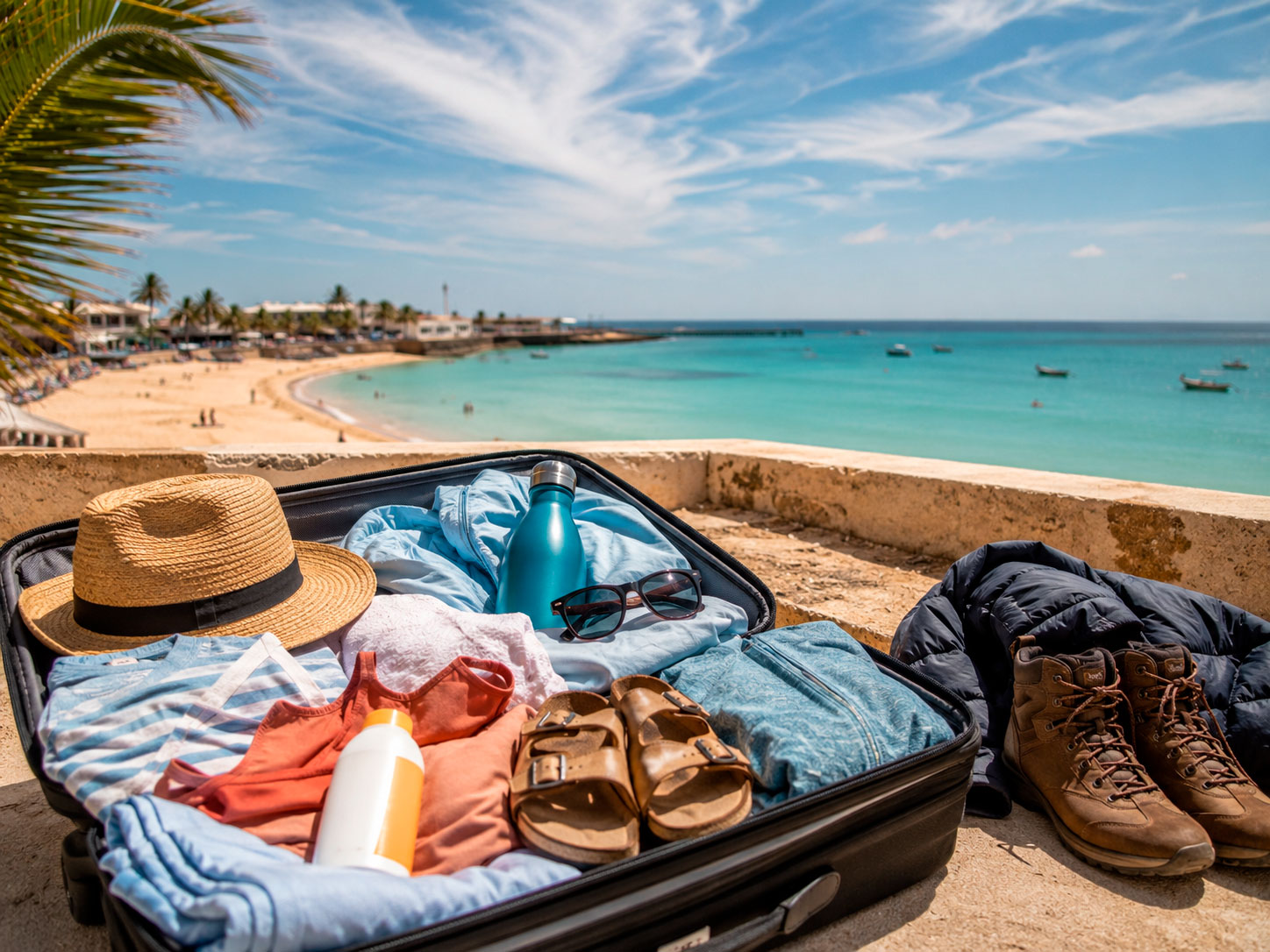
Packing for Sal Island is relatively simple.
You need lightweight clothing, reliable sun protection, comfortable footwear and one extra layer for the wind. You do not need a suitcase prepared for every possible version of tropical weather.
Sal is warm and dry throughout most of the year, but the island is also sunny, exposed and frequently windy. Those conditions matter more than bringing a large variety of outfits. Before deciding how much warm clothing or wind protection to carry, it helps to understand how Sal’s climate and wind change throughout the year.
The best luggage for Sal is practical, light and easy to use repeatedly.
Pack for sun, wind, sand and ordinary comfort — not for imaginary emergencies.
Quick packing list for Sal Island
Clothing
- lightweight T-shirts or tops;
- shorts, skirts or breathable trousers;
- swimwear;
- underwear and sleepwear;
- one light long-sleeved layer;
- and a thin jumper, overshirt or windbreaker.
Footwear
- comfortable sandals or flip-flops;
- walking shoes or trainers;
- and optional water shoes for rocky or specific coastal areas.
Sun and beach items
- high-protection sunscreen;
- sunglasses;
- a secure hat or cap;
- a reusable water bottle;
- a beach bag or light daypack;
- and a cover-up or light shirt.
Health and personal care
- regular medication;
- a small first-aid kit;
- lip balm;
- after-sun or moisturiser;
- insect repellent if you normally use it;
- and any personal products you strongly prefer.
Documents and electronics
- passport and travel documents;
- booking confirmations;
- travel insurance details;
- bank cards and some accessible cash;
- phone and charger;
- power bank;
- and offline copies of important information.
What clothes should you pack for Sal?
For daytime use, choose clothes that are:
- lightweight;
- breathable;
- comfortable in direct sun;
- easy to combine;
- and quick to wash and dry.
You will probably use a smaller selection of clothes more often than expected.
Typical daytime clothing may include:
- T-shirts or loose tops;
- shorts;
- light dresses or skirts;
- linen or breathable trousers;
- and simple beachwear.
Sal does not normally require a complicated wardrobe. The atmosphere in Santa Maria, beach bars and many restaurants is generally relaxed. This informal style is part of what Santa Maria is really like beyond the postcard: tourist-oriented and convenient, but rarely formal.
Comfort matters more than creating a different outfit for every meal.
Do you need warm clothing?
You do not need heavy winter clothing, but one light layer is useful.
The combination of wind, shade and evening temperatures can feel fresher than visitors expect, particularly between approximately December and spring.
A practical extra layer might be:
- a thin jumper;
- a light cardigan;
- a long-sleeved overshirt;
- or a compact windbreaker.
This is particularly useful for:
- evening meals near the sea;
- boat trips;
- early departures;
- exposed viewpoints;
- and windy beach days.
You are unlikely to need a thick coat. You may still be grateful for something more substantial than a short-sleeved shirt when the wind continues after sunset.
What changes according to the time of year?
The essential packing list remains similar throughout the year, but a few adjustments make sense.
From December to May
This is generally the windier and fresher part of the year.
Consider packing:
- a light wind-resistant layer;
- an extra long-sleeved top;
- a secure hat rather than one that blows away easily;
- and slightly warmer clothing for evening terraces or boat trips.
From June to October
Conditions are usually warmer, the sea is warmer and average wind tends to be lower.
Prioritise:
- very breathable clothing;
- additional swimwear;
- strong sun protection;
- and clothing that copes well with warmer, more humid evenings.
A light layer can still be useful, particularly on the coast or in air-conditioned interiors.
During the months with a greater chance of rain
Rain remains limited compared with many destinations, but brief showers are more possible around late summer and early autumn.
You normally do not need heavy waterproof equipment. A compact, lightweight rain layer may be useful if you are travelling during that period or planning long outdoor days.
How many outfits do you really need?
The answer depends on the duration of the trip and access to laundry, but most travellers need fewer clothes than they initially prepare.
For approximately one week, a sensible basis might be:
- four or five lightweight tops;
- three or four lower garments;
- two sets of swimwear;
- one light evening layer;
- one slightly smarter but comfortable outfit;
- and enough underwear for the planned washing schedule.
This is not a compulsory formula. It is a reminder that many items can be worn more than once and combined differently.
Quick-drying clothes are particularly useful because Sal’s dry air and wind often make simple washing practical.
Do you need smart clothes for restaurants?
Most restaurants in Santa Maria do not require formal clothing.
A clean, relaxed evening outfit is normally sufficient:
- a casual dress;
- light trousers and a shirt;
- a polo shirt;
- or smart but comfortable sandals or shoes.
Higher-category hotels or particular restaurants may have their own dress expectations, especially for dinner. Check beforehand when staying in a resort.
For most independent travellers, one smarter casual outfit is enough.
What footwear should you bring?
Two practical types of footwear normally cover most situations.
Sandals, flip-flops or easy beach footwear
Useful for:
- the beach;
- the pool;
- short walks;
- and relaxed daytime use.
Comfortable walking shoes or trainers
Useful for:
- longer walks through Santa Maria;
- island tours;
- rocky or uneven ground;
- buggy or quad activities;
- and visits away from the beach.
Do not bring only delicate sandals. Some streets, excursion stops and natural areas are dusty, sandy, rocky or unfinished.
Do you need water shoes?
Water shoes are not essential for every traveller.
They may be useful for:
- rocky entries into the sea;
- specific natural pools or coastal stops;
- snorkelling areas;
- or travellers who prefer additional foot protection.
For ordinary use on the main sandy areas of Santa Maria Beach, they are not normally necessary.
Different parts of the coast offer very different conditions, so compare the main beaches in Sal and what each one is best for before buying equipment you may not need.
Bring them because your planned activities justify them, not because every island automatically requires them.
Sun protection is essential
The wind can make the temperature feel comfortable while your skin continues receiving strong sun exposure.
Pack:
- high-protection sunscreen;
- lip balm with sun protection;
- sunglasses with proper ultraviolet protection;
- a hat or cap that stays secure in the wind;
- and a light shirt or beach cover-up.
Apply sunscreen before long walks, excursions and beach sessions rather than waiting until the skin already feels hot.
If you use a particular sunscreen because of allergies or sensitive skin, bring enough from home. Basic products are available locally, but your preferred brand or formulation may not be.
A secure hat works better than a dramatic one
Large lightweight hats may look ideal in photographs but can become difficult on windy days.
A cap, adjustable hat or design with a secure strap may prove more practical.
The best sun hat in Sal is often the one that remains on your head without requiring constant negotiation with the Atlantic.
Bring more than one swimsuit
Two swimsuits are useful even for a short trip.
This allows one to dry while you use the other and avoids beginning every morning with yesterday’s cold swimwear.
A rash vest or ultraviolet-protective swimming top may also be useful for:
- children;
- long periods in the water;
- surfing or kitesurfing;
- snorkelling;
- and people with sun-sensitive skin.
What bag works best during the day?
A lightweight backpack, crossbody bag or secure beach bag is normally sufficient.
It should be large enough for:
- water;
- sunscreen;
- a light layer;
- a small amount of cash;
- a phone;
- and basic personal items.
A foldable tote bag is also useful for supermarket purchases, beach equipment and carrying extra items back to the accommodation.
A fully open bag may be convenient on the beach but less suitable for busy streets or excursions. A zip or secure closure is preferable for valuables.
Should you bring a reusable water bottle?
Yes. A reusable bottle is useful for excursions, walks and everyday beach use.
Fill it with drinking water from a source you consider safe rather than assuming that tap water is automatically suitable for your needs. Our guide to drinking tap water in Sal without overdramatising the issue explains why bottled or reliably filtered water is usually the simplest option for visitors.
An insulated bottle can be particularly useful because water left in direct sun becomes warm quickly.
What toiletries should you bring?
Basic toiletries can be purchased in Santa Maria, but imported brands and specialist products may be more expensive or less consistently available.
Bring sufficient quantities of products you depend on, such as:
- prescription skincare;
- contact-lens products;
- specific hair products;
- allergy-friendly toiletries;
- and preferred menstrual or personal-care products.
Ordinary shampoo, soap, toothpaste, deodorant and similar essentials are available. There is usually no need to carry oversized supplies for a normal holiday.
What should go in a small medical kit?
A compact kit might include:
- pain relief that you normally use;
- plasters and antiseptic wipes;
- treatment for minor stomach problems;
- antihistamines if appropriate for you;
- after-sun treatment;
- rehydration salts;
- and medication for motion sickness if you are taking boat trips.
Bring enough of any regular prescription medication for the whole stay, ideally with a reasonable reserve.
Keep essential medication in your hand luggage rather than placing all of it in a checked suitcase.
Do you need insect repellent?
Sal’s dry and windy conditions generally mean insects are less dominant than in humid tropical destinations.
However, insect activity can vary according to weather, location and time of year.
A small repellent may be worthwhile if:
- you are particularly sensitive to bites;
- you are travelling during warmer or more humid months;
- your accommodation lacks effective screens;
- or you plan to spend evenings outside.
You do not normally need to prepare as though you were entering a rainforest.
What documents should you carry?
Prepare both accessible digital copies and, where useful, printed copies of:
- your passport identification page;
- flight reservations;
- accommodation details;
- airport transfer information;
- travel insurance;
- entry or visa documentation where applicable;
- and essential medical information.
Keep the address and telephone number of your accommodation available offline. Mobile data may not be active immediately after arrival.
Money and payment items
Do not depend on one card or one source of cash.
Bring:
- at least one working international bank card;
- a second payment option stored separately;
- some euros or accessible money for arrival;
- and a secure wallet or small document holder.
There is no reason to carry the entire travel budget every day. For more detail on escudos, euros, cards and cash withdrawals, see our guide to money and everyday payments in Sal Island.
What electronics should you bring?
For most travellers, the essentials are:
- a mobile phone;
- a charger;
- a power bank;
- headphones;
- and any camera equipment you genuinely plan to use.
A power bank is useful during full-day excursions, especially when using the phone for photographs, maps and communication.
Download important information before leaving your accommodation, including:
- maps;
- booking confirmations;
- flight details;
- insurance information;
- and contact numbers.
It is also useful to decide before travelling whether you will rely on roaming, accommodation Wi-Fi, an eSIM or a local SIM. Our guide to Internet access and SIM cards in Sal Island compares the main options.
Do you need a travel plug adapter?
Plug types and sockets may vary between properties, particularly in accommodation designed for international visitors or fitted at different times.
Check with your hotel or apartment before travelling.
A compact universal adapter can be useful when:
- your plugs are not standard European two-pin designs;
- you are travelling from outside continental Europe;
- or you carry several devices with different plug formats.
A small multi-port USB charger may also reduce the number of separate adapters you need.
Should you bring expensive camera or drone equipment?
Bring equipment only when you realistically expect to use it.
Sal is highly photogenic, but wind, sand and salt require care.
Useful protective items include:
- a secure camera strap;
- a protective bag;
- lens cloths;
- sealed storage for memory cards and batteries;
- and a simple method of keeping sand away from moving parts.
Drone use may be subject to aviation, security, privacy or local restrictions. Verify current requirements before travelling rather than assuming that open landscape means unrestricted flying.
What should you pack for an island tour?
For a normal full-day tour, carry:
- water;
- sunscreen;
- a hat;
- sunglasses;
- comfortable footwear;
- a light layer;
- some cash in smaller notes;
- and a phone or camera with sufficient battery.
Depending on the itinerary, you may also want:
- swimwear;
- a small towel;
- water shoes;
- and a sealable bag for wet clothing.
Ask the tour operator what is included before carrying unnecessary equipment all day.
What should you pack for a boat trip?
Boat trips normally justify a few additional items:
- a light wind-resistant layer;
- secure sun protection;
- non-slip or appropriate footwear;
- a waterproof phone pouch;
- motion-sickness medication when needed;
- and a small dry bag for valuables.
The air can feel cooler on the water even when the beach is warm.
What should you pack for buggy or quad activities?
Expect dust, wind and direct sun.
Wear or carry:
- closed footwear;
- clothing you do not mind getting dusty;
- sunglasses or suitable eye protection;
- a scarf or face covering if recommended;
- sunscreen;
- and secure storage for your phone.
Loose hats, open handbags and delicate white clothing are rarely the strongest strategic choices for a dusty off-road route.
What should families pack for children?
Families should prioritise familiar essentials rather than assuming every preferred product will be available immediately.
Useful items include:
- high-protection sunscreen suitable for children;
- ultraviolet-protective swimwear;
- a secure sun hat;
- familiar medication;
- reusable water bottles;
- light snacks for transfers or excursions;
- and a compact activity or comfort item for travel periods.
For babies or very young children, check in advance whether your usual nappies, formula or specialist foods are readily available near the accommodation.
Do not rely entirely on buying every essential after landing. Families preparing the trip may also find it useful to read what travelling to Sal with children involves in practice.
What can you leave at home?
Heavy coats
A light layer is normally enough. A thick winter coat will spend most of the trip occupying expensive suitcase space.
Several formal outfits
One smart-casual option is usually sufficient unless a particular event or hotel dress code requires more.
Delicate shoes
Sand, dust and uneven ground do not reward fragile footwear.
Too many pairs of shoes
Beach footwear and comfortable walking shoes cover most ordinary situations.
Large quantities of ordinary toiletries
Basic products can be bought locally. Bring specialist or preferred products, not a private pharmacy and supermarket.
Excessive electronic equipment
Do not carry devices that will remain in the accommodation while you use only your phone.
Clothing for every imagined scenario
Sal does not require separate wardrobes for the beach, lunch, afternoon, sunset and casual inspection of the hotel corridor.
Common packing mistakes
Bringing only beachwear
You still need suitable clothing for restaurants, excursions, evening wind and ordinary walking.
Forgetting a light layer
Warm daytime temperatures do not prevent exposed evenings or boat trips from feeling fresh.
Underestimating the sun because of the wind
A comfortable breeze can hide strong ultraviolet exposure.
Bringing unsuitable shoes
Not every excursion stop has smooth pavement or soft sand.
Packing too many “just in case” outfits
Most travellers repeat the clothes that feel most comfortable and ignore the rest.
Placing all essential medication in checked luggage
Keep necessary medication and documentation accessible during the journey.
Depending entirely on buying specialist products locally
Availability of exact brands and formulations cannot be guaranteed.
A practical packing checklist
Essential
- Passport and required travel documents.
- Accommodation and transfer details.
- Bank cards and accessible arrival money.
- Regular medication.
- Lightweight clothing.
- Swimwear.
- Comfortable walking footwear.
- Sun protection.
- Phone and charger.
- One light layer for wind and evenings.
Very useful
- Reusable water bottle.
- Small daypack or secure beach bag.
- Power bank.
- Second swimsuit.
- Lightweight long-sleeved shirt.
- After-sun or moisturiser.
- Small first-aid kit.
- Foldable tote bag.
- Offline copies of important information.
Useful only for certain plans
- Water shoes.
- Snorkelling equipment.
- Waterproof phone pouch.
- Dry bag.
- Motion-sickness medication.
- Buggy or quad face covering.
- Sports equipment.
- Universal travel adapter.
Need to buy something after you arrive?
Browse supermarkets, clothing stores, souvenir shops and other places to shop across Sal Island through our local directory.
In summary
Packing for Sal Island does not need to be complicated.
Bring:
- lightweight and breathable clothing;
- comfortable beach and walking footwear;
- strong sun protection;
- at least two sets of swimwear;
- a reusable water bottle;
- regular medication;
- and one light layer for wind, evenings and boat trips.
Leave behind unnecessary formalwear, heavy jackets, delicate shoes and multiple versions of clothing you are unlikely to wear.
The most useful suitcase is not the one that prepares for every theoretical possibility. It is the one that supports the activities you have actually planned.
Pack enough to feel prepared, but lightly enough that your suitcase does not arrive with a more complicated holiday plan than you do.
For Sal, comfort, sun protection and adaptability matter much more than variety.