

Most mistakes visitors make in Sal Island are not dramatic.
They usually involve choosing the wrong area, underestimating the sun and wind, planning transport badly, trusting outdated information or spending the entire holiday following assumptions that were never quite correct.
None of these mistakes automatically ruins a trip. But several small misunderstandings together can make Sal feel more expensive, less comfortable or more disappointing than it needed to be.
A good trip to Sal is often less about doing everything right than avoiding a few unnecessary complications.
Mistake 1: expecting a lush tropical island
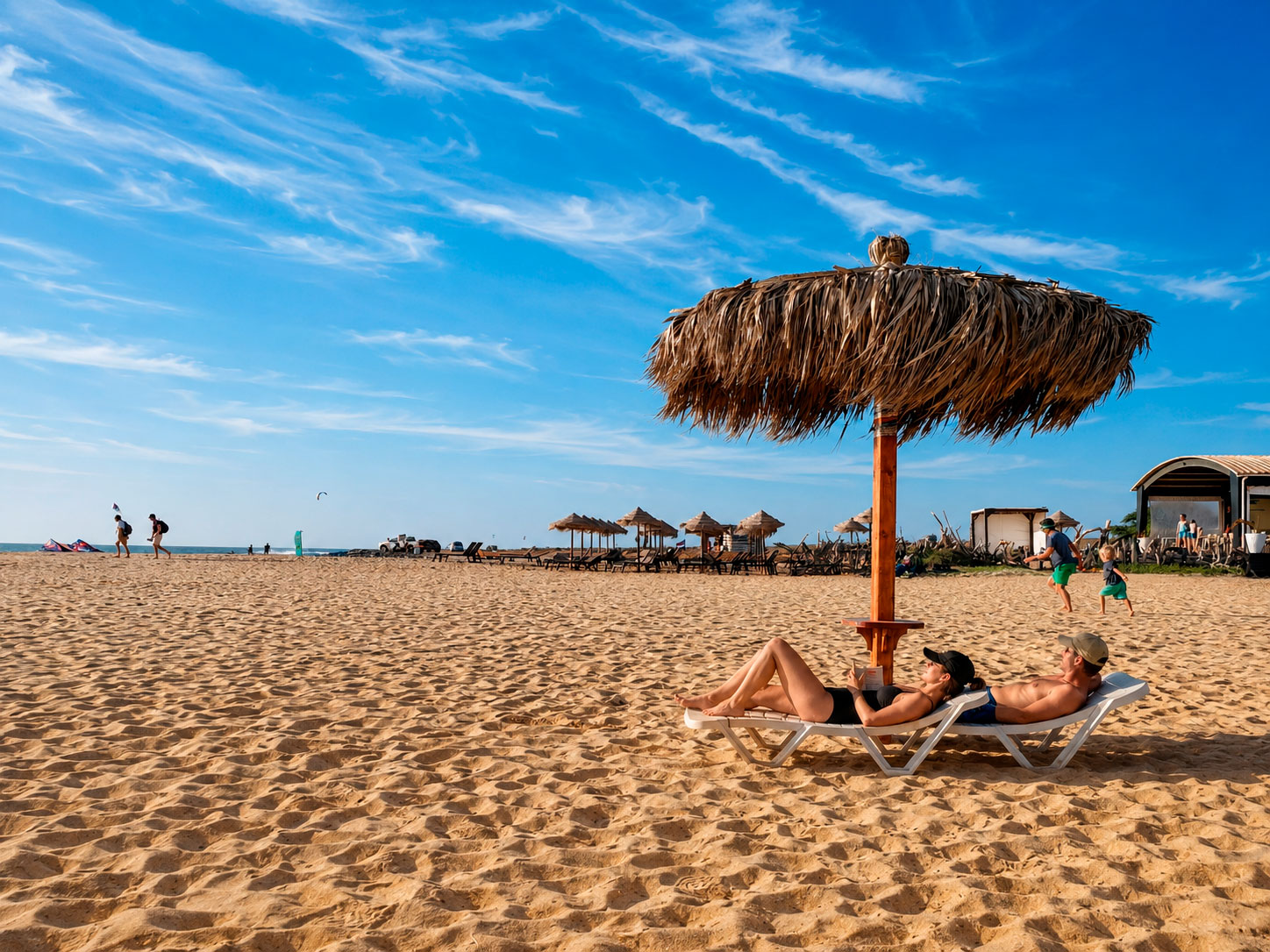
Sal has turquoise water, attractive beaches and warm weather, but its landscape is mostly dry, open and desert-like.
Visitors who arrive expecting dense vegetation, tropical forests and dramatic green scenery may feel confused during the airport transfer.
The mistake is not preferring greener destinations. It is judging Sal against an image that does not belong to it.
Sal is an Atlantic desert island with beautiful coastal areas, not a tropical jungle surrounded by hotels.
How to avoid it
Look beyond beach photographs before travelling. Understand that the island’s character comes from:
- open terrain;
- strong light;
- wind;
- dry landscapes;
- and the contrast between the land and the sea.
If that sounds appealing, Sal is easier to appreciate from the beginning. Our guide to what to expect when you land in Sal for the first time explains why the airport road and the initial landscape can surprise visitors who arrive with a more tropical image in mind.
Mistake 2: choosing accommodation only by price or photographs
A cheaper room is not always a better deal if it leaves you far from the beach, restaurants or the parts of Santa Maria you expect to use every day.
At the same time, paying more for a large resort may not make sense if you want to spend most of the trip exploring the town independently.
Photographs rarely explain:
- how noisy the street may be;
- how far the property really is from the centre;
- whether the walk feels comfortable at night;
- how exposed the area is to wind;
- or whether the surroundings match your idea of a holiday.
How to avoid it
Choose the area first and the property second.
Before booking, check:
- walking distance to the beach;
- distance to restaurants and supermarkets;
- recent reviews;
- the exact position on the map;
- and whether you want independence, quietness or resort convenience.
Our comparison of Santa Maria and the quieter places to stay in Sal Island explains how location affects transport, daily convenience, atmosphere and the real cost of the trip.
Mistake 3: assuming you need a rental car for the entire stay
Sal is small, but that does not automatically mean a car is necessary every day.
If you stay in central Santa Maria, many daily needs can be managed on foot. Taxis and organised tours can cover specific journeys, and renting a car for one or two selected days may be enough.
A vehicle sitting unused outside the accommodation is not freedom. It is parking with an invoice.
How to avoid it
Decide what you genuinely want to visit before booking transport.
A rental car makes more sense when:
- you want to explore independently;
- you plan several journeys outside Santa Maria;
- you are travelling with other people;
- or you prefer controlling your own timetable.
For a beach-focused stay, taxis, walking and occasional tours may be simpler. Before booking, consider whether you really need to rent a car in Sal Island or whether a combination of walking, taxis and selected excursions would be more practical.
Mistake 4: booking too many similar excursions
Several island tours may include many of the same locations: Pedra de Lume, Buracona, Palmeira, Espargos, Shark Bay or Miragem.
Booking multiple excursions without comparing the routes can mean paying several times to see almost the same places.
How to avoid it
Before booking, ask for:
- the complete itinerary;
- the duration;
- what is included;
- which entrance fees are separate;
- the type of vehicle;
- and how much time is spent at each stop.
Choose one broad island tour first. Add specialised activities later if they offer something genuinely different.
Mistake 5: underestimating the wind
The wind is one of the defining features of Sal.
It can make the temperature feel comfortable, which sometimes causes visitors to underestimate sun exposure. It can also affect swimming, beach comfort, boat trips and water activities.
A beach that looks calm in a promotional photograph may feel completely different on a windy day.
How to avoid it
- Check daily conditions before sea activities.
- Bring a light layer for evenings and exposed areas.
- Secure towels, hats and lightweight belongings.
- Do not assume wind means the sun is weak.
- Choose beaches according to conditions, not only appearance.
The strength and consistency of the wind vary throughout the year. Our guide to Sal Island’s climate and wind month by month can help you understand what to expect during your travel dates.
Mistake 6: ignoring the strength of the sun
Wind and dry air can hide how much sun your skin is receiving.
Visitors sometimes stay outside for hours because the heat feels manageable, only to discover the consequences later.
Long walks also feel easier at the beginning than they do after extended exposure with little shade.
How to avoid it
- Use sunscreen regularly.
- Carry water.
- Wear a hat when practical.
- Avoid unnecessarily long walks during the strongest part of the day.
- Do not wait until you feel thirsty to drink.
The wind may negotiate with the heat. It does not negotiate with ultraviolet radiation.
Mistake 7: relying entirely on cards
Cards are accepted in many hotels, restaurants, supermarkets and established tourist businesses.
However, cash remains useful for:
- some taxis;
- small purchases;
- local shops;
- tips;
- informal services;
- or situations where a payment terminal is unavailable.
Travelling with no cash at all can create avoidable inconvenience.
How to avoid it
Use a combination of card and cash. Check your bank’s withdrawal and foreign-payment fees before travelling, and avoid carrying more money than you need for the day.
Mistake 8: withdrawing too much cash at once
The opposite mistake is taking out a large amount immediately without knowing how much cash you will actually use.
This can increase:
- bank fees;
- the amount you need to store securely;
- and the risk of returning home with currency you no longer need.
How to avoid it
Withdraw a sensible initial amount and adjust after observing your real spending pattern.
Keep larger amounts in secure accommodation storage rather than carrying everything with you.
For a complete explanation of escudos, euros, ATMs and card use, read our guide to cash, cards and everyday payments in Sal Island.
Mistake 9: not confirming taxi prices beforehand
Taxis are useful and widely used, but misunderstandings are easier to avoid when the fare is agreed before the journey begins.
This is particularly important for:
- airport transfers;
- night journeys;
- waiting time;
- multi-stop trips;
- or routes outside Santa Maria.
How to avoid it
Confirm the total fare before getting into the vehicle. Clarify whether the price is per person or for the whole taxi, and whether waiting or additional stops are included.
A ten-second conversation is easier than a ten-minute disagreement at the destination.
Mistake 10: trusting every online opening hour
Google Maps, social media and travel platforms are useful, but not every business updates its information consistently.
A restaurant may appear open while its kitchen is between services. A shop may have reduced Sunday hours. A business may have moved or temporarily closed without updating every platform.
How to avoid it
When a plan depends on a particular place being open, confirm the same day by phone, message or through your accommodation.
This is especially useful for:
- pharmacies;
- restaurants outside normal meal times;
- rental offices;
- excursion agencies;
- and businesses outside central Santa Maria.
Our practical guide to opening hours, Sundays and island time in Sal explains why published schedules should sometimes be treated as guidance rather than an absolute guarantee.
Mistake 11: assuming every beach offers the same conditions
Sal’s beaches differ in access, wind, waves, services, atmosphere and suitability for swimming.
A beach may be excellent for kitesurfing and uncomfortable for a relaxed swim. Another may look beautiful but offer little shade or few nearby facilities.
How to avoid it
Choose beaches according to what you want to do:
- swim;
- walk;
- sunbathe;
- watch water sports;
- find a quieter area;
- or stay close to restaurants and facilities.
The “best beach” depends more on your plans than on a universal ranking. Our comparison of the best beaches in Sal Island and what each one is suited to can help you choose according to swimming conditions, services, wind and atmosphere.
Mistake 12: leaving valuables unattended on the beach
Sal generally feels relaxed, especially around the main tourist areas, but relaxed does not mean risk-free.
Phones, wallets, passports, cameras and bags should not be left unattended while everyone goes into the water.
How to avoid it
- Take only what you need.
- Use secure storage at your accommodation.
- Share responsibility for belongings when travelling with others.
- Avoid displaying unnecessary amounts of cash.
This is not special advice for Sal. It is sensible behaviour on almost any busy beach.
Mistake 13: spending the entire trip inside a resort
A resort can provide comfort, food, entertainment and easy access to the beach.
There is nothing wrong with choosing that type of holiday.
But visitors who never leave the hotel may return with a very limited idea of Sal, especially if they assume the resort represents the whole island.
How to avoid it
Even during a resort-based stay, consider:
- walking through Santa Maria;
- eating at least once outside the hotel;
- visiting another part of the island;
- or spending time in an area not designed entirely around the resort experience.
You do not need to reject comfort in order to see more context.
Mistake 14: assuming Santa Maria represents all of Sal
Santa Maria is the island’s main tourism centre and the easiest base for most visitors.
But it is not the whole island.
Espargos, Palmeira, Pedra de Lume and smaller settlements show different parts of daily life, history and geography.
How to avoid it
Leave Santa Maria at least once if your schedule allows. An island tour, taxi journey or independent route can provide enough contrast to understand Sal more clearly.
Seeing more does not require turning the trip into an expedition.
Mistake 15: expecting every meal near the beach to be excellent
A sea view is not a quality certificate.
Restaurants in tourist areas vary in food, service, value and consistency. Some are excellent. Others depend more heavily on location than on the kitchen.
How to avoid it
- Check recent reviews, not only the overall score.
- Look at the menu and prices before sitting down.
- Ask what fish or dishes are genuinely available that day.
- Do not assume the most visible restaurant is automatically the best one.
- Try a mixture of tourist-oriented and simpler local places.
Mistake 16: treating every approach from a seller as a serious problem
In some tourist areas, visitors may be approached by people offering souvenirs, tours or other services.
This can become tiring, especially when it happens repeatedly.
However, escalating every interaction usually creates more discomfort than it solves.
How to avoid it
A brief and firm response is normally enough:
“No, thank you.”
Continue walking and avoid entering a long explanation or negotiation if you are not interested.
Being polite does not require stopping, and being firm does not require hostility.
Mistake 17: planning every day too tightly
Weather, wind, tiredness, transport and changing interests can affect plans.
A timetable with no margin may turn small delays into unnecessary stress.
How to avoid it
Keep some flexibility between excursions and leave at least part of the trip unscheduled.
A useful structure might include:
- a few confirmed activities;
- selected restaurant reservations;
- and several open periods for beach time, rest or spontaneous decisions.
Flexibility is more useful when it is intentional rather than accidental.
Mistake 18: doing no preparation at all
Sal is relatively easy to visit, but arriving without basic information can make the first days unnecessarily awkward.
Before travelling, it helps to understand:
- where your accommodation is located;
- how you will reach it from the airport;
- how payments usually work;
- what mobile connection you may need;
- what kind of weather and wind to expect;
- and which activities need advance booking.
You do not need to organise every hour. You simply need enough context to avoid solving basic problems after arrival.
The biggest mistake: expecting Sal to be something else
Many smaller mistakes begin with the same problem: arriving with another destination already imagined.
Sal is not the Caribbean, the Canary Islands or a giant tropical resort.
It has attractive beaches, visible tourism, dry landscapes, modest towns, strong wind and a daily rhythm that may feel different from the one visitors bring with them.
Some people love that combination. Others discover that it is not quite what they wanted.
Both reactions are legitimate. What matters is arriving with a reasonably accurate picture.
Sal is easier to enjoy when you stop asking why it is not somewhere else.
Ready to explore Sal with fewer wrong turns?
Browse island tours, natural attractions, water activities and other experiences across Sal Island through our local directory.
In summary
The most common mistakes in Sal Island are usually avoidable:
- choosing accommodation without checking the location;
- renting transport without knowing whether it is needed;
- booking repetitive excursions;
- underestimating the sun and wind;
- depending entirely on cards;
- trusting outdated schedules;
- leaving valuables unattended;
- and judging the entire island through Santa Maria or a resort.
The solution is not to plan every detail or approach the trip with suspicion.
It is to arrive with:
- basic practical information;
- realistic expectations;
- some flexibility;
- and enough curiosity to see the island beyond the first impression.
Sal does not require a complicated strategy. It simply rewards travellers who understand what kind of destination they have chosen.